Hukin & Heath
1855 - 1953
It is not possible to discuss the Birmingham silver and electroplate manufactures Hukin and Heath without also mentioning Christopher Dresser, the designer. Dr. Dresser was a designer a head of his time and his collaboration with Hukin & Heath did much to build their business. He also worked with several other manufactures across a range of materials.
Hukin and Heath's relationship with Dresser started in 1877 but the company was started by Jonathan Wilson Hukin and John Thomas Heath in Birmingham in 1855. The city was a powerhouse in metal manufacturing in the 19th century. Their Imperial Works factory was located at 139 Great Charles Street in central Birmingham, close to the Birmingham School of Art and the city's Museum and Art Gallery. In 1879, they opened impressive showrooms at 19 Charterhouse Street, Holborn in London and entered a silver mark using the owners initials of JWH and JTH in the same year. It is likely that these showrooms were opened off the back of their production of Dresser's designs.
In 1881 Jonathan Hukin retired and 5 years later John Hartshorne Middleton became a partner. A new silver mark replacing Hukin's initials with Middleton's was adopted and registered at the Birmingham Assay office in 1886, the London office in 1887 and the Sheffield office in 1896. By 1900 Hukin and Heath diversified to also deal in precious metals and stones, coins, bullion and leather goods. In 1904 they became a Limited Company and continued until the 1950s when they became part
It is not possible to discuss the Birmingham silver and electroplate manufactures Hukin and Heath without also mentioning Christopher Dresser, the designer. Dr. Dresser was a designer a head of his time and his collaboration with Hukin & Heath did much to build their business. He also worked with several other manufactures across a range of materials.
Hukin and Heath's relationship with Dresser started in 1877 but the company was started by Jonathan Wilson Hukin and John Thomas Heath in Birmingham in 1855. The city was a powerhouse in metal manufacturing in the 19th century. Their Imperial Works factory was located at 139 Great Charles Street in central Birmingham, close to the Birmingham School of Art and the city's Museum and Art Gallery. In 1879, they opened impressive showrooms at 19 Charterhouse Street, Holborn in London and entered a silver mark using the owners initials of JWH and JTH in the same year. It is likely that these showrooms were opened off the back of their production of Dresser's designs.
In 1881 Jonathan Hukin retired and 5 years later John Hartshorne Middleton became a partner. A new silver mark replacing Hukin's initials with Middleton's was adopted and registered at the Birmingham Assay office in 1886, the London office in 1887 and the Sheffield office in 1896. By 1900 Hukin and Heath diversified to also deal in precious metals and stones, coins, bullion and leather goods. In 1904 they became a Limited Company and continued until the 1950s when they became part
of William Hutton & Sons.
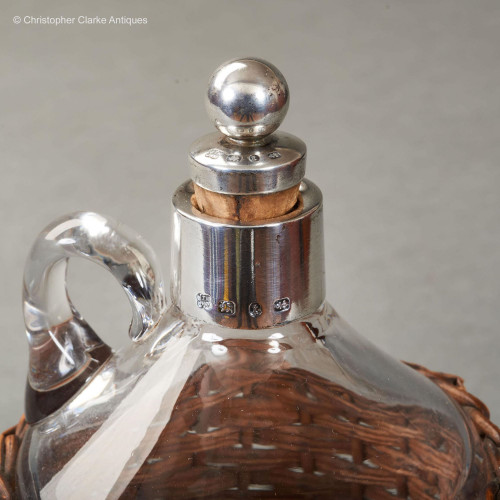
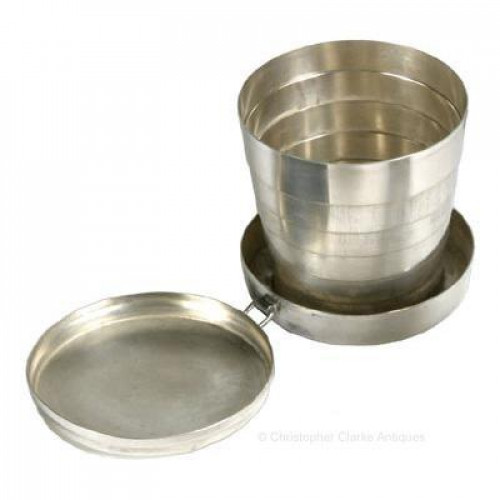
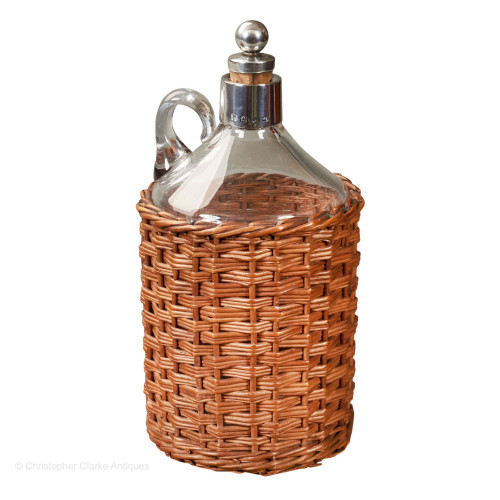
The company produced a wide range of goods mostly aimed at the domestic market but of course by the second half of the 19th century, travel and field sports was far more popular. There was a demand for portable items and goods that would be practical for train travel, sporting events or picnics etc. Their silver and electroplate was mounted on china, glass, wood, rattan and wicker with leather used for shaving sets and cased items etc.
The quality and innovation of their designs and the availability at different price levels, depending on whether in silver or electroplate, appealed to the aspiring middle class that were becoming a strong market. Their items were both aesthetically pleasing and practical.
2 ITEMS